
Learn Catering Menu Ideas for Any Event
Halfway through the party, one guest is still circling the buffet with an empty plate. Every dish has gluten, meat, or the one ingredient they can’t eat, and nobody thought to ask ahead of time. A menu built for your guests makes sure that moment never happens.
Planning the perfect event often comes down to the menu, whether it’s a fancy wedding or a simple backyard get-together. Some people think picking a few crowd-pleasing dishes is all it takes, but that misses what really makes guests feel welcome and remembered.
Here’s what surprises most hosts: according to University of Minnesota Duluth’s Fresh Leaf Catering, locking in your menu and final guest count a few days ahead lets caterers cover everyone’s needs, even tricky dietary restrictions or late changes.
Quick Summary
| Key Point | Explanation |
|---|---|
| 1. Identify event requirements first | Know the type, timing, and place of your event so you can shape the menu to fit. |
| 2. Gather guest dietary information | Ask guests about their dietary needs so everyone can eat safely and feel included. |
| 3. Develop a balanced preliminary menu | Build a menu draft with a mix of dishes and options for different diets that fit the event. |
| 4. Collaborate closely with catering professionals | Talk through the menu with your caterer to fine-tune it and use their know-how. |
| 5. Confirm details before the event | Do a final check of the details, guest count, and menu to head off last-minute problems. |
Step 1: Identify Your Event Requirements
Setting up a catering menu starts with knowing what your event needs. This first step turns your ideas into a meal your guests remember, one that fits the day. Before you pick dishes, gather the details that will guide every choice that follows.
Start with the type of event you’re hosting, whether it’s a work conference, wedding, graduation party, or small family get-together.
Each kind of event needs its own plan for the food and how it’s served. A business lunch, for example, needs a different menu than a casual backyard cookout. Planning a work gathering? Our guide to planning a summer company picnic walks through the food and logistics.
Next, look at your guest list and who’s coming. How many people will be there? Are there dietary needs you have to plan for? Common ones include vegetarian, vegan, gluten-free, kosher, or food allergies.
According to University of Minnesota Duluth’s Fresh Leaf Catering, sharing your guest details and dietary needs early helps caterers get ready so every guest can enjoy the meal.
Timing and place matter just as much. Will the food be served indoors or outdoors? Is it breakfast, lunch, dinner, or an all-day event? Think about the season, the likely weather, and the kitchen or serving space you’ll have.
A summer outdoor wedding might call for lighter, fresh dishes, while a winter work event may be better with warm, filling ones.
Finally, set a clear budget for the food. That number shapes many of your choices. Be honest about your limits, and keep in mind that good catering is worth a fair spend.
Share your budget range openly with your caterer. That way, they can suggest smart options that fit your money and still taste great.
Nail down these needs early and you’ll have a strong base for a menu that fits your guests and makes the event one to remember.
The table below gives a quick look at each main step, with its goal and what to keep in mind.
| Step | Goal | What to Keep in Mind |
|---|---|---|
| Identify Event Requirements | Fit the menu to the event type and setup | Guest count, event type, timing, place, budget |
| Assess Dietary Preferences and Restrictions | Support inclusion and safety | Collect full guest info, plan for allergies and needs |
| Create Preliminary Menu Draft | Build a balanced, tasty menu | Variety, fits the event, options for restrictions |
| Collaborate with Catering Professionals | Fine-tune the menu and use their skill | Open talk, use their tips, sort out the details |
| Finalize Menu Selections | Confirm the menu and details | Tasting, final tweaks, written contract |
| Review and Confirm Details Before Event | Head off problems and keep things smooth | Final walkthrough, confirm details, last-minute check |
Step 2: Assess Dietary Preferences and Restrictions
Planning for dietary needs and restrictions is a big part of a menu that works for every guest. It takes care, kindness, and planning so everyone feels valued and can eat without worry.
Start with an easy way to collect dietary details. Add a spot on your invitations or sign-up forms built to capture these needs.
Give clear options so guests can list what they need, like vegetarian, vegan, gluten-free, dairy-free, kosher, halal, or food allergies. Keep it simple, which helps people answer fully and honestly.
According to event guidance from Tripleseat, planning for dietary needs is about keeping guests safe and helping everyone feel included, not just checking a box. Go past a simple list and show real care for each guest’s needs.
Work with your caterer to turn these needs into a flexible plan, and ask for the ingredients and how each dish is made.
That openness helps guests with serious allergies feel safe about what they eat. Good caterers can offer options that aren’t just allowed but a real treat to eat.
Try a color-coded or labeled system to mark dishes during the event. Small cards or signs can show which dishes fit which needs.
This helps guests quickly find safe choices without feeling singled out or like a bother.
Remember that dietary needs are personal. Some guests have medical allergies, while others follow religious or ethical rules. Treat each need with respect and make meeting them feel normal.
Your goal is a meal where everyone feels at ease, included, and able to eat without stress.
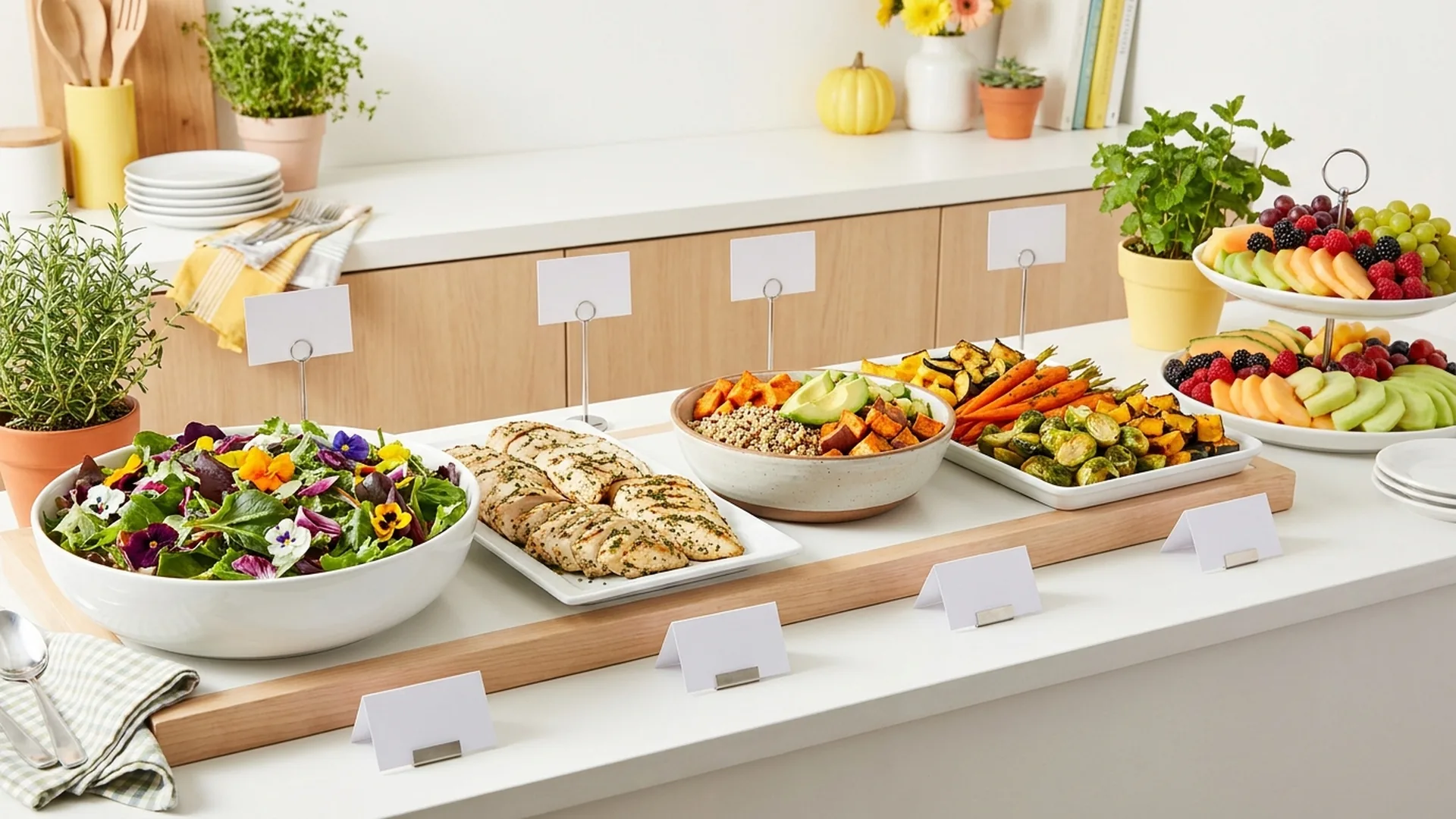
When you plan for dietary needs with care, you show real thought and build a space where every guest feels welcome.
Step 3: Create a Preliminary Menu Draft
Building a first menu draft is the fun, creative part. This step turns your event needs and dietary notes into a real plan your guests will enjoy.
Think of the draft as a rough sketch: a flexible starting point you’ll shape with your caterer.
Catering Menu Ideas by Event Type
Use these combinations as a starting point for your draft. Each set pairs a crowd-pleaser with a lighter option and a dish that covers common dietary needs, so you can mix and match to fit your guest list and budget.
Corporate Lunches and Office Events
- Boneless wing bar with three sauces, such as mild buffalo, garlic parmesan, and honey BBQ
- Build-your-own wrap platter with grilled chicken, turkey, and roasted vegetables
- Mixed green salad and a pasta salad for lighter appetites
- Fresh fruit tray and a cookie assortment
Weddings and Receptions
- Passed appetizers like caprese skewers, bacon-wrapped dates, and mini chicken-and-waffle bites
- Carving station with herb-roasted turkey or tri-tip
- Signature dry-rub wing platter for a relaxed late-night bite
- Vegetarian pasta and a seasonal roasted vegetable medley
Graduations and Backyard Parties
- Classic bone-in wings with a sauce flight
- Slider trio: pulled pork, buffalo chicken, and a black bean veggie option
- Corn on the cob, baked beans, and a crisp coleslaw
- Brownie and lemon bar dessert box
Brunch and Morning Meetings
- Chicken-and-waffle sliders with hot honey
- Scrambled eggs, breakfast potatoes, and a bacon or sausage tray
- Yogurt parfait station with granola and berries
- Assorted pastries and a fresh fruit bowl
As you draft, mark which dishes are vegetarian, gluten-free, or nut-free, so your final menu in Step 5 already reflects the dietary needs you mapped in Step 2.
Start with a balanced mix that suits different tastes. Your draft should include appetizers, main dishes, sides, and desserts that fit the event’s mood and your guests.
Think about the time of day, the style of the event, and any cultural notes when you pick dishes. A work lunch needs a different plan than a wedding party.
According to WebstaurantStore’s catering portion guide, planning the right amount of food per person is key to a balanced menu. Offer a few choices for each course to give variety while keeping one clear theme.
For a work event, for example, you might offer a veggie pasta, grilled chicken, and a fish dish so there’s something for everyone.
Fold the dietary needs from the last step right into this draft. Give each course options for different diets.
That might mean gluten-free versions of popular dishes or veggie options that are just as tasty. Aim for choices that feel like part of the plan from the start.
Think about how the menu looks and feels. Mix hot and cold dishes, use different cooking styles, and consider how the food will look side by side.
Color and texture do a lot for how a meal feels. A good menu tells a story through its dishes, fits the event, and builds excitement for your guests.
Send the draft to your caterer for a look. Share your goals, dietary needs, and event details.
Caterers can offer helpful tips, with changes that boost flavor, look, and ease. They may suggest in-season swaps or fun plating that lifts your first idea.
Remember, a draft is a shared starting point. Stay open to your caterer’s ideas while keeping your own. The best menus come from teamwork between what you want and what the caterer knows.
Step 4: Collaborate with Catering Professionals
Working with your caterer turns your draft into a polished, doable plan. Lean on the know-how of a professional event caterer while keeping your goals for the event front and center.
Think of your caterer as a partner who can lift your first idea with their skill and fresh ideas.

You don’t need a long, formal meeting. Most of this happens over a quick call or email, so have your notes ready: your event details, dietary needs, guest count, budget, and first menu ideas.
Caterers are busy, so coming prepared respects their time and gets you better answers. Send your draft ahead so they can review it before you talk. Clear, organized clients are the ones caterers most like to work with.
According to ezCater’s event-planning guide, planning for dietary needs early and confirming details with your caterer heads off problems later. When you connect, ask your caterer for honest feedback on your menu.
They may suggest swaps, point out cheaper options, or share plating ideas that fit your event’s style.
Stay open to their advice while sticking to your plan. Caterers know a lot about what’s in season, which flavors go together, and real-world things like prep and delivery.
They can help you set portion sizes, suggest drink pairings, and keep your menu both tasty and easy to pull off.
As you work together, talk about food safety and how dishes are made. Ask where they get their ingredients, how they handle dietary needs, and how they keep food fresh during delivery and service.
A good caterer will be open about how they work and glad to answer any questions.
Write down what you talk about and the changes you make. Ask for a full proposal that lists the final menu, prices, ingredients, how it’s made, and any special requests.
This written plan works as a contract and gives both sides a clear picture of what to expect. If you need help finishing your menu, check out our free estimate service.
Good teamwork is about mixing your ideas with the caterer’s skill. Go in with an open mind, respect, and clear talk, and you’ll create a meal that goes above and beyond.
Step 5: Finalize the Catering Menu Selections
Locking in your menu is where all the planning becomes real. This step takes care and a close eye on the details so every part of your event’s food fits what you pictured.
Timing counts here. According to University of Minnesota Duluth’s catering team, your final menu and guest count are usually due about three business days before most events.
Caterers usually need a set window to lock in the menu so they can order food, line up staff, and plan the setup.
Review the menu with a close eye, checking each course against your first plan and the dietary needs from before. Confirm the vegetarian, vegan, gluten-free, and other special options aren’t just there but sound good too.
Your goal is a menu that feels planned and welcoming, where the extra options feel like real choices, not leftovers.
As you lock things in, go over the key details. That includes the serving style (buffet, plated, family-style), when each course comes out, staff, gear, and how the food is set out.
These small things can shape the whole meal. Watch how dishes stay at the right temperature, how the food is served, and any special gear certain dishes need.
Budget is another thing to check. Compare the final price against what you talked about so it stays in your budget. Ask for a full cost list, with the per-person price, service fees, and any charges for late changes.
Before you say yes, ask for a tasting if you can. It lets you try the real flavors, look, and quality of the menu.
During the tasting, check the portion sizes, how warm the food is, and how well it’s cooked. This is your chance to make final tweaks and be sure the menu is up to your standard.
Once you’re happy, ask for a final written contract that spells out the menu, service, and cost. It should work as a full deal that protects both you and the caterer.
Handle this last step with care and a clear head, and you’ll create a meal your guests enjoy and that fits your event.

Step 6: Review and Confirm Details Before the Event
Checking the details before your event is the final step. It keeps your careful planning on track.
This is your last quality check. It lets you catch problems early and make quick fixes that can shape how well the day goes.
Set up a final walkthrough with your caterer about a week before the event. In this meeting, walk through every part of the menu and service, one by one.
Confirm when the food is prepped, delivered, set up, served, and cleared. Nail down the details, like when staff show up, what gear is needed, and how to set up at your place.
Look closely at the guest count and dietary needs. Check that the final head count matches what you talked about and that every dietary need you noted shows up in the menu.
Double-check that the extra meals are made in large enough amounts and are just as good as the main dishes.
Walk through the venue setup with your caterer. Talk through the doors and entrances, kitchen or prep areas, where food is served, and any tight spots.
Give the team clear directions, parking info, and who to call at the venue. If you want to confirm late details, reach out to your caterer so nothing is left unclear.
Build a timeline that covers every part of the food service. Include set times for appetizers, the main course, dessert, and any special moments like toasts or cake cutting that affect timing.
Line this timeline up with your event helper or venue manager so there are no clashes or timing snags.
Read through the contract one last time so every spoken deal is in writing. Confirm the price, payment terms, cancel rules, and any extra fees.
Talk openly about backup plans for surprises, like a late change in guest count or a small menu tweak.
The day before, make one last confirmation call. Review the details, recheck the guest count, and confirm everyone knows their job.
Use this checklist to run through the key items before your event, so nothing slips through during your final check with the caterer.
| Review Item | Description | Status (Yes/No) |
|---|---|---|
| Guest Count Finalized | Confirm the final number of guests | |
| Dietary Restrictions Verified | Confirm all special dietary needs are covered | |
| Menu Reviewed & Approved | Double-check the final menu and extra options | |
| Venue Access & Setup | Sort out site access, kitchen needs, gear | |
| Timeline Established | Set serving times for each course | |
| Contract/Agreement Confirmed | Go over service, price, cancel policy | |
| Emergency Contacts Shared | Trade key contacts for the day of the event |
Bring Your Dream Catering Menu to Life
Looking for an easy, tasty, and budget-friendly way to cater your Central Minnesota event? Lily’s Wings Buffet Style Catering is ready to step up.
Lily’s Wings Burgers & Things · 1970 Sandstone Lp S, Sartell, MN 56377
Our guide shows how much it helps to know your guests, plan for dietary needs, and work with your caterer to pull off a smooth event. Even with good tips, turning ideas into a finished menu takes skill and give-and-take. Call us at (320) 492-4097 or fill out the form for a free catering estimate.
Frequently Asked Questions
How Can I Identify the Specific Requirements for My Event’s Catering Menu?
Start by looking at the type of event, your guest list and who’s coming, the timing and place, and your budget. These details help you shape the menu to fit the day and your guests.
What Should I Do to Accommodate Dietary Restrictions When Customizing a Catering Menu?
Set up an easy way to collect dietary info from guests. This can cover vegetarian, vegan, gluten-free, and allergy needs. Work with your caterer to make sure these needs are met with options guests will like.
How Do I Create a Balanced Preliminary Menu Draft?
Offer a range of dishes for different tastes, including appetizers, main courses, sides, and desserts. Add choices that fit the event’s mood, and let options for dietary needs blend right into the menu.
What Steps Should I Take to Finalize My Catering Menu Selections?
Check and confirm the dietary needs and key details so they match your goals and budget. Talk about timing and serving style, and do a tasting if you can. Then finish a written contract that lists every part of the menu and service.