

Planning a wedding feels overwhelming until you break it into a month-by-month wedding planning checklist. The Knot’s 2024 Real Weddings Study found that average U.S. couples spend 14 months planning their wedding and budget around $33,000 on the day itself. This ultimate wedding planning checklist walks you through every stage, from picking a date to writing thank-you notes, with practical timing tips we’ve learned from over a decade of catering Minnesota weddings.
Quick Summary
| Takeaway | What It Means |
|---|---|
| Start 12+ months out | Most popular venues and caterers in Central Minnesota book 9-12 months ahead, especially for summer Saturdays. |
| Lock the budget before the venue | Your budget shapes every decision after it. Setting it first prevents costly back-tracking. |
| Catering and venue eat 50% of your budget | Plan these two line items first, everything else flexes around them. |
| Send save-the-dates 6-8 months before | Standard for local weddings. Bump to 9-12 months for destination or holiday weekend dates. |
| Final headcount 2 weeks out | This number locks in catering quantities and seating. Build in a 5-10% buffer. |
Wedding Planning Checklist Step 1: Set Your Budget
The average U.S. wedding cost $33,000 in 2024 per The Knot Real Weddings Study, but Minnesota weddings tend to run lower at $26,000–$30,000 in our experience catering across St. Cloud, Minneapolis, and Alexandria. Your wedding planning checklist should start with this single number, because every other decision flexes around it. Set your absolute maximum first, then plan to spend 10-15% under that number to leave a buffer for surprise costs.
How to Allocate Your Wedding Budget
- Venue and catering: 45-50% (the single biggest line item)
- Photography and videography: 10-12%
- Attire and beauty: 8-10%
- Flowers and decor: 8-10%
- Music and entertainment: 6-8%
- Stationery and invites: 2-3%
- Wedding planner: 5-10% (if hiring one)
- Buffer for surprises: 5-10%
Once both partners agree on the number, decide who’s contributing what. If parents are pitching in, get their commitments in writing or at least a clear conversation early. Nothing strains a wedding more than money discussions surfacing six weeks before the big day.
12+ Months Before: Lock the Foundations
The first three months of your wedding planning checklist set everything else in motion. The most popular Minnesota wedding venues book 9-12 months out, and premium summer Saturday dates can disappear up to 18 months ahead. This is also when you decide whether to hire a wedding planner.
- Set the date and budget (or two-three potential dates if venues are tight)
- Build the guest list (this drives every venue and catering decision)
- Decide on a wedding planner (full-service, partial, or day-of)
- Tour and book your venue (this anchors the entire timeline)
- Book the catering (most caterers need 9+ months for peak Saturday dates)
- Hire your photographer (top photographers book a year out)
- Start the wedding website (Zola and The Knot offer free hosting)
- Begin researching wedding rings if you don’t have them yet
For couples planning a Central Minnesota wedding, our team at Lily’s Wings has seen first-hand how booking the venue and catering together (or in the same week) prevents date conflicts. If you’re scouting locations, our list of best bridal venues in St. Cloud Minnesota covers our top recommendations.
9-12 Months Before: Vendor Lock-In
This window of your wedding planning checklist is for booking the rest of your major vendors before they fill up. Every additional month of delay means fewer choices and often higher prices, especially for in-demand vendors. According to Brides magazine, most couples spend 8-15 hours per week on planning during this stage.
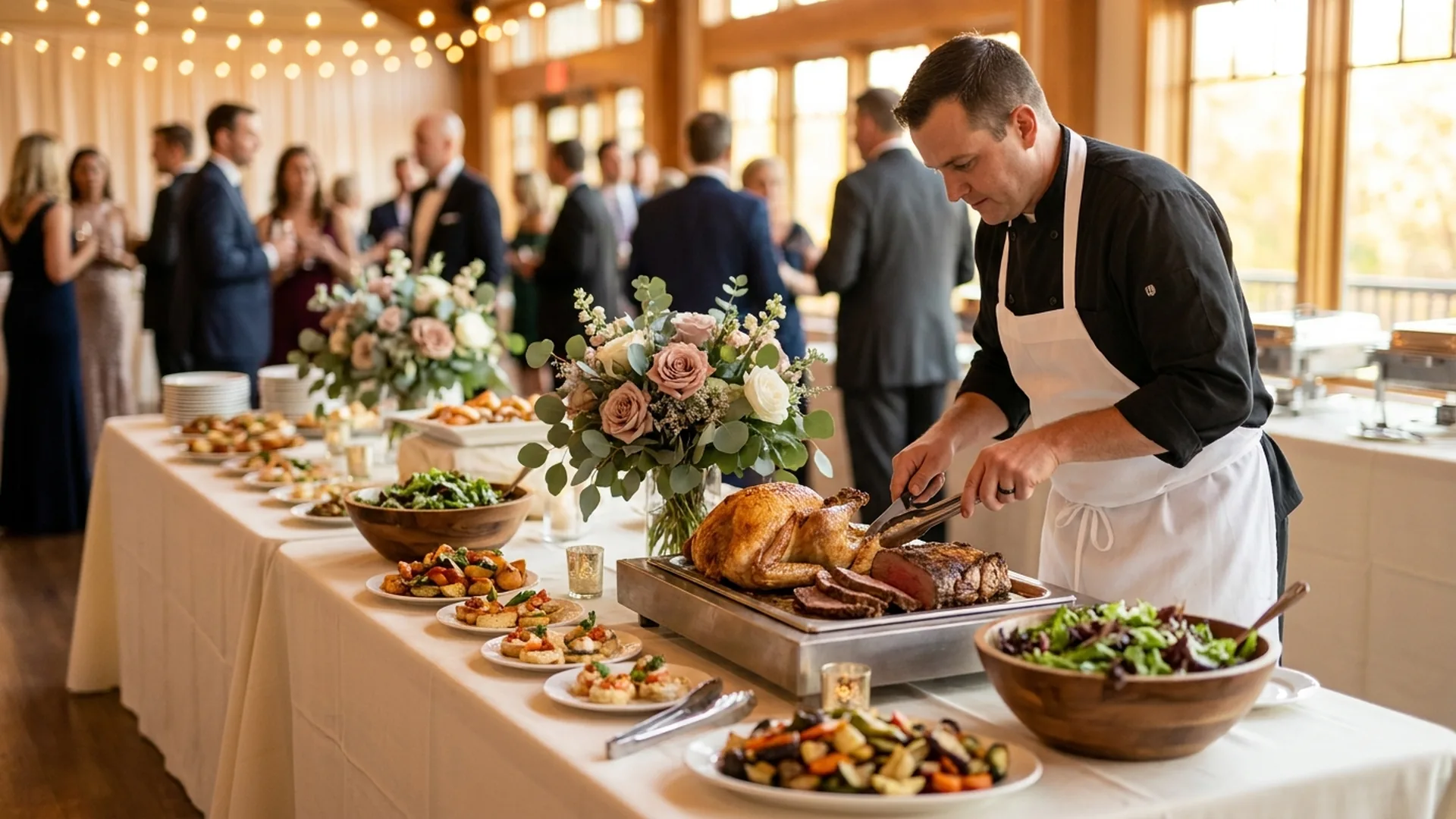
- Book the videographer (often shares timeline with photographer)
- Book the DJ or live band (music shapes the reception energy)
- Choose and order your wedding dress (alterations need 8-12 weeks)
- Order suits and tuxedos for the groom and groomsmen
- Hire a florist or plan DIY arrangements
- Book transportation (limos, party buses, shuttles for guests)
- Reserve a block of hotel rooms for out-of-town guests
- Send save-the-dates for destination or holiday-weekend weddings
- Plan the engagement party if you’re hosting one
If you’re still narrowing catering options, we wrote a full step-by-step guide on how to organize catering for weddings that walks through tasting decisions, dietary planning, and contract negotiation.
6-9 Months Before: The Details Phase
By the six-month mark on your wedding planning checklist, your major vendors should be locked in and you can shift to the details. This is when registry decisions, menu tastings, and stationery design happen. From our experience catering Minnesota weddings, couples who finalize their menu by month six avoid most last-minute substitutions.
- Set up your wedding registry (3-4 stores covering different price points)
- Choose bridesmaid dresses and groomsman attire
- Schedule a menu tasting with your caterer
- Order invitations (6 months before mailing)
- Plan your honeymoon (book flights and accommodations now)
- Book hair and makeup trials
- Choose your wedding cake or dessert option
- Send save-the-dates for standard local weddings (6-8 months out)
- Reserve rentals: chairs, linens, tents, dance floor if needed
For inspiration on creative menu options, browse our 10 creative wedding catering ideas covering everything from BBQ stations to interactive food bars.
3-6 Months Before: Stationery and Logistics
This stretch of your wedding planning checklist is when invitations go out, and the daily reality of the wedding starts feeling tangible. Couples who get through this phase calmly almost always credit good organization and an early menu lockdown with their caterer.
- Order wedding invitations and RSVP cards
- Apply for your marriage license (rules vary by state, Minnesota requires it within 6 months of the ceremony)
- Finalize the ceremony script with the officiant
- Book a rehearsal dinner venue
- Choose readers, ushers, and other ceremony roles
- Confirm honeymoon details (passports, visas, immunizations if international)
- Buy wedding rings if you haven’t already
- Schedule a final dress fitting
- Order favors if you’re including them
2-3 Months Before: Final Stretch Begins
Eight to twelve weeks out is when your wedding planning checklist shifts to invitations and RSVP tracking. This is also when most couples feel the planning crunch, so leaning on your caterer, planner, and venue coordinator pays off. A good caterer should be sending you a finalized menu, dietary accommodation list, and timeline by now.
- Mail invitations (6-8 weeks before for local, 8-10 weeks for out-of-town)
- Start tracking RSVPs (a spreadsheet or wedding website tool works fine)
- Finalize the bar package (open bar, beer/wine only, signature cocktails)
- Schedule rehearsal dinner invitations
- Confirm vendor arrival times with each one
- Buy wedding accessories: shoes, veil, jewelry, garter
- Plan the seating chart framework (you’ll fill it in once RSVPs land)
- Choose ceremony music and reception playlist must-haves
- Write personal vows if you’re doing custom ones
1 Month Before: Confirmation Phase
The final month of the wedding planning checklist is mostly confirming what you’ve already planned and chasing down stragglers. Build a master document with every vendor’s contact info, arrival time, and balance owed. Your caterer needs the final headcount roughly 14 days before the wedding, so RSVP follow-ups are urgent now.
- Chase down outstanding RSVPs (text or call directly)
- Submit the final headcount to your caterer 2 weeks out
- Finalize the seating chart and create place cards
- Pay vendor balances (most are due 1-2 weeks before)
- Pick up the wedding dress and tuxedos
- Confirm honeymoon bookings one final time
- Pack wedding day emergency kit (safety pins, band-aids, stain remover)
- Write thank-you notes for any early gifts
- Break in your shoes at home for at least an hour total
Week of the Wedding: Final Sprint
The week before is for delegation and rest. The brides and grooms we’ve worked with who skip this rule (and try to do everything themselves) almost always show up exhausted on day one. Hand off the day-of details to your wedding planner, day-of coordinator, or trusted family member.
- Confirm all vendor arrival times in writing
- Drop off welcome bags at hotels for out-of-town guests
- Finalize the rehearsal schedule and rehearsal dinner
- Prepare tip envelopes for each vendor (if tipping)
- Pack overnight bags for your wedding-night hotel stay
- Get a manicure and pedicure 2-3 days before
- Hydrate and sleep (this is non-negotiable)
- Charge phones, cameras, and any backup equipment
- Print copies of the timeline for everyone in the wedding party
Wedding Day: Stay Present
The day itself moves fast. By the time you finish photos with the bridal party, the cocktail hour is half over. Eat a real breakfast, lean on your wedding party, and don’t try to manage the timeline yourself. The whole point of hiring vendors is so you can be a guest at your own wedding.
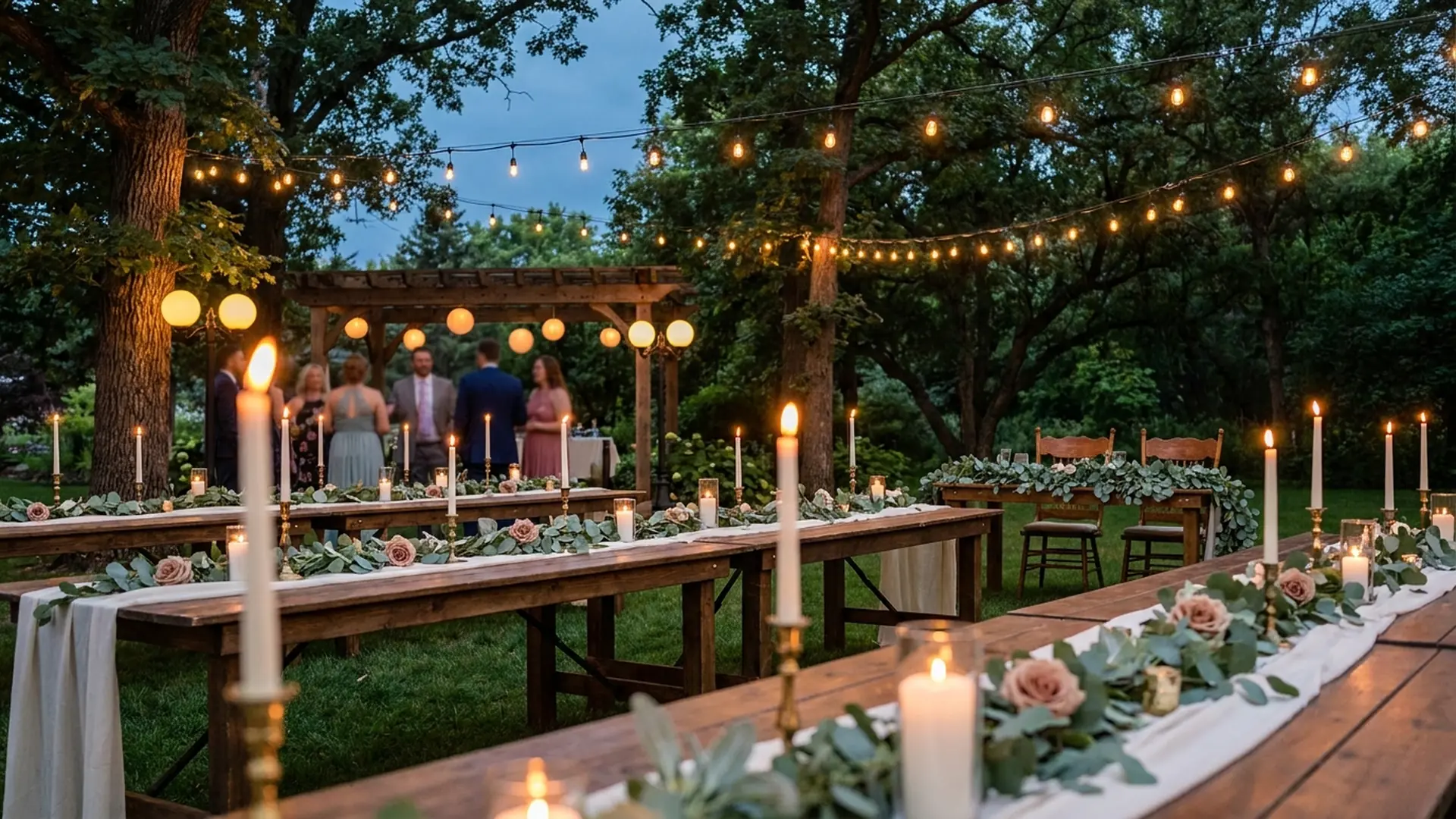
- Eat breakfast (most couples regret skipping it)
- Hand off all vendor balances and tips to your point person
- Trust your team and step out of the logistics
- Take five minutes alone with your partner at some point
- Eat dinner (you will need your energy)
- Stop for water between toasts and dancing
After the Wedding: Wrap-Up Tasks
The final stage of every wedding planning checklist is the post-wedding wrap-up. It’s short on glamour but matters for closing out vendor relationships, preserving memories, and starting married life. Most thank-you notes should go out within 3 months of the wedding, per modern etiquette guidelines from Zola.
- Return rental items (suits, decor, anything borrowed)
- Send thank-you notes within 2-3 months
- Preserve your wedding dress if you’re keeping it
- Order wedding photos and an album
- Update your name and accounts if changing names
- Review vendors on The Knot, WeddingWire, and Google
- File the marriage certificate properly
Frequently Asked Questions About Wedding Planning
What is the 50/30/20 rule for weddings?
The 50/30/20 rule splits your wedding budget into three buckets: 50% for the venue and catering (the biggest line item), 30% for photography, attire, flowers, and music, and 20% for stationery, decor, favors, and a buffer. It’s a simple framework that prevents overspending in any one area.
Is $5,000 a good budget for a wedding?
$5,000 is a tight but workable wedding budget for an intimate gathering of 20-30 guests. Most couples at this budget host backyard or park weddings, use drop-off catering, and lean on DIY for decor and flowers. National averages run far higher (~$33,000), but a small, meaningful wedding at this budget is absolutely possible.
What are the 5 things every bride needs?
Most brides need: (1) a comfortable backup pair of flats for the reception, (2) a wedding-day emergency kit with band-aids and stain remover, (3) a confirmed timeline printed out, (4) a charged phone with vendor contacts, and (5) a trusted point-person handling logistics so the bride doesn’t have to.
When should I send save-the-dates?
Send save-the-dates 6-8 months before your wedding for local guests and 9-12 months ahead for destination weddings or holiday weekends. Formal invitations should follow 6-8 weeks before the wedding, with RSVPs due 4 weeks out so your caterer has time to finalize quantities.
How much should I tip wedding vendors?
Standard wedding tipping in the U.S. runs 15-20% for catering staff (if not included in the contract), $50-100 per musician, $50-200 for the photographer and videographer, and $50-100 for hair and makeup artists. Always check contracts first, since some vendors include gratuity automatically.
Ready to Plan Your Wedding?
A wedding planning checklist works best when it matches the way you actually plan, month-by-month, vendor-by-vendor. Start with the budget, lock in the venue and catering early, and trust the people you hire on the day itself. The most relaxed couples we’ve catered for had their major decisions made by the six-month mark of the wedding planning checklist and spent the final weeks on small details rather than big ones.
Lily’s Wings Catering has served Central Minnesota weddings for over a decade across St. Cloud, Alexandria, Minneapolis, and the surrounding Twin Cities area. If you’re looking for affordable wedding catering in Minnesota, our team can walk you through options starting at $15 per head. Get a free estimate for your wedding catering today, or browse affordable wedding ideas in Minnesota for more inspiration.